
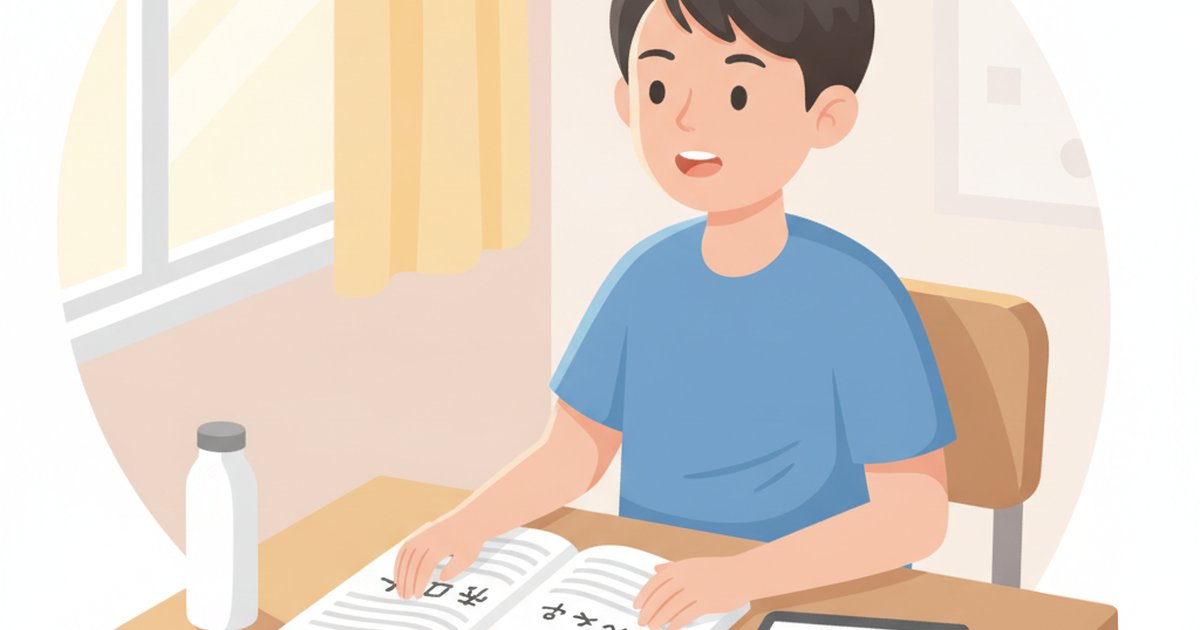
If your household speaks mostly English, 阅读理解 is probably the quiet panic of PSLE Chinese. Your child can read the passage but can’t explain why an answer is right. They guess. They lose marks on inference and 概括 questions they don’t understand the shape of.
AI tutors promise to fix this. Some genuinely help. Some make it worse. Here’s the honest split before you pay for anything.
What Doesn’t Work: Wrong-Syllabus Chinese
The single biggest trap. Major incumbents have shipped Chinese content built on the old syllabus, not 欢乐伙伴 — so the vocabulary, phrasing, and question style don’t match what’s taught in school today. Your child practises one thing, sits a different exam.
Before subscribing to any platform for 华文, make them prove the content is current-syllabus aligned. If they can’t, walk away. Mother Tongue is exactly the subject these tools treat as an afterthought, and it’s the one English-speaking families need most.
What Doesn’t Work: Answer Mills and Hallucinations
Most cheap AI tutors are thin chat wrappers — you upload a screenshot, it spits an answer. For 阅读理解 that’s actively harmful. Comprehension marks come from method: how to scan for the 关键词, how to lift-and-rephrase, how to structure a 概括. An AI that hands over the model answer teaches your child nothing and builds dependency. December 2024 research even has a name for it — “metacognitive laziness.”
Worse, these tools hallucinate. AI sometimes invents a definition or misreads a 成语. In Chinese, where one wrong character flips the meaning, that’s a real risk to a child still building foundations. One confidently-wrong answer and your child internalises it.
What Works: Socratic Practice, Not Solutions
The version that actually moves marks does the opposite. It refuses to just give the answer and instead walks your child through the passage: “Which sentence tells you how the character felt? Underline it. Now say it in your own words.” That’s the same guiding-question approach MOE built into its own free Student Learning Space — proof the pedagogy is sound, not a gimmick.
Recent studies back this: a tutor prompted to support rather than replace thinking avoided the retention damage a standard ChatGPT-style tutor caused. For comprehension, that’s everything. You want a child who can attack an unseen passage in the exam hall, not one who memorised answers at home.
What Works: Voice for 听写 and 口试
Here’s where AI quietly beats a worksheet. 阅读理解 doesn’t live alone — it sits beside 听写 and 口试, and those need speaking and listening, not typing. A primary kid thinks faster than they type Chinese anyway; forcing long typed answers (a common complaint on KiasuParents) just adds friction.
Voice-first practice lets your child read a passage aloud, answer orally, and get feedback on pronunciation and phrasing — the way the actual oral exam works. That’s a genuine multimodal advantage, not a feature checkbox.
What Works: Seeing Whether It’s Actually Working
The old tuition trap: you pay monthly and only find out at exam time. A real parent spent over S$5,000 in a year at a Tampines centre and watched a C become a C+. With Chinese especially, you need to see which question types your child keeps missing — inference, 概括, vocabulary-in-context — not just “5 worksheets done.”
A parent dashboard that shows concept-level weak spots, plus monthly billing you can cancel anytime, changes the maths. A family plan covering all subjects for three children runs about S$59/month — against roughly S$1,850 a year for a single subject on a lock-in contract. The savings are real, but the bigger win is finally knowing if it’s working before the PSLE, not after.
The Bottom Line
For PSLE 阅读理解, the rules are simple. Reject anything on the old syllabus. Reject answer mills that hallucinate. Choose a tutor that asks guiding questions, uses voice for oral and 听写, and shows you the weak spots. Then build a short daily routine — 20 minutes of guided passages beats a two-hour Sunday cram.
AI won’t replace your child’s effort. Used right, it makes that effort count.