
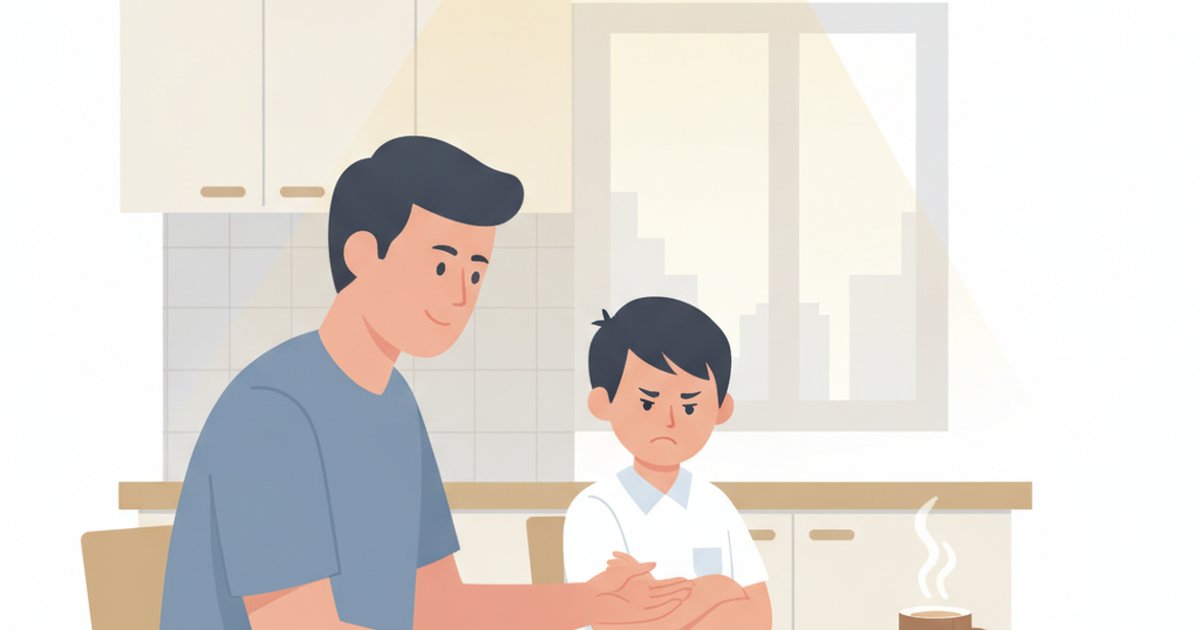
It’s 7:30pm. The assessment book is open. You ask one question about that problem sum and your P3 son slides off the chair like his bones have left his body. Your P5 daughter says “you don’t even teach like the teacher” and shuts the laptop.
You’re not a bad parent. You’re a parent trying to do a job your kid has decided you’re not allowed to do.
Why the Parent-as-Tutor Model Breaks Around P3
Singapore parents spent S$1.8 billion on private tutoring in 2023 — up nearly 30% from 2018. A big chunk of that spend is parents quietly admitting the kitchen-table version isn’t working.
Three things usually break it:
- Role confusion. You already enforce bedtime, screen time, and vegetables. Adding “marker of wrong sums” overloads the relationship.
- Feedback lag. You correct on Monday. School test is Friday. By then your kid has forgotten both the mistake and your explanation.
- Pacing mismatch. You explain at adult speed. A child’s working memory taps out at sentence two. Cue the sliding-off-chair.
Threads on KiasuParents repeat the same story: smart parent, willing child, ten minutes of “WHY ARE YOU NOT LISTENING” — and the books go back in the bag.
Why Throwing More Tuition at It Often Backfires
The default reflex is to outsource: tuition centre, home tutor, another subscription. Sometimes it works. Often it doesn’t, and the bill is brutal.
One Tampines family spent over S$5,000 in a year at a centre — fees, transport, workbooks pushed at the counter — and watched their P5 daughter go from a C to a C+. A Singapore father told reporters he spends S$7,000 a month on PSLE tuition for his 12-year-old.
The deeper issue: tuition shifts the location of the struggle, not its source. If your child won’t speak up at home, they often won’t speak up at a centre either — they just fail more quietly, and you only find out at the next report card.
The Three Things That Actually Move the Needle
Across the parents who do break the cycle, a pattern repeats:
- Get yourself out of the marking seat. The relationship survives when you stop being the one who circles errors in red. Hand that job to a tool, a tutor, or the school — anyone but you.
- Shrink the unit of work. Twenty minutes of focused practice with a clear “done” beats an hour of vague “do your corrections.” Kids cooperate when the finish line is visible.
- Make the feedback instant. A wrong answer flagged in five seconds — gently, with a hint — teaches more than a parent’s lecture three days later. This is the one place AI genuinely helps, when it’s used as a coach and not an answer machine.
What Parents Are Trying Instead
The shift in the last two years has been quiet but real. Parents are mixing free school tools with low-commitment digital helpers instead of locking into S$150-a-month centres.
- MOE’s SLS — free, every Singapore student already has access. The LEA assistant asks guiding questions instead of giving answers. Underused at home; worth ten minutes of your evening to set up.
- A short, voice-friendly AI tutor session for the topics the kid is genuinely stuck on — especially for P1–P4, where typing long answers is the actual blocker, not the math.
- A weekly five-minute parent review of what got attempted and where the kid struggled — replacing the nightly homework battle with a calmer Sunday check-in.
This is the gap LearnBuddy was built for: voice and drawing input so younger kids aren’t punished for slow typing, a Socratic mode that refuses to hand over answers, and a parent dashboard that shows you what was hard — without you needing to be in the room.
What to Try This Week
Three small experiments, in order:
- Wednesday: Hand the marking to anyone but yourself for one assessment. Notice your child’s body language.
- Thursday: Cut homework into two 20-minute blocks with a snack between. Set a timer.
- Sunday: Five-minute review with your child — what was easy, what was hard, what did you try — no corrections, no lectures.
If the cooperation comes back even slightly, you’ve found the real problem. It wasn’t your child’s attitude. It was the format of the help.
The kid who “refuses to study with you” usually just refuses to be corrected by you. Take that role off your plate, and most of the door-slamming stops on its own.