
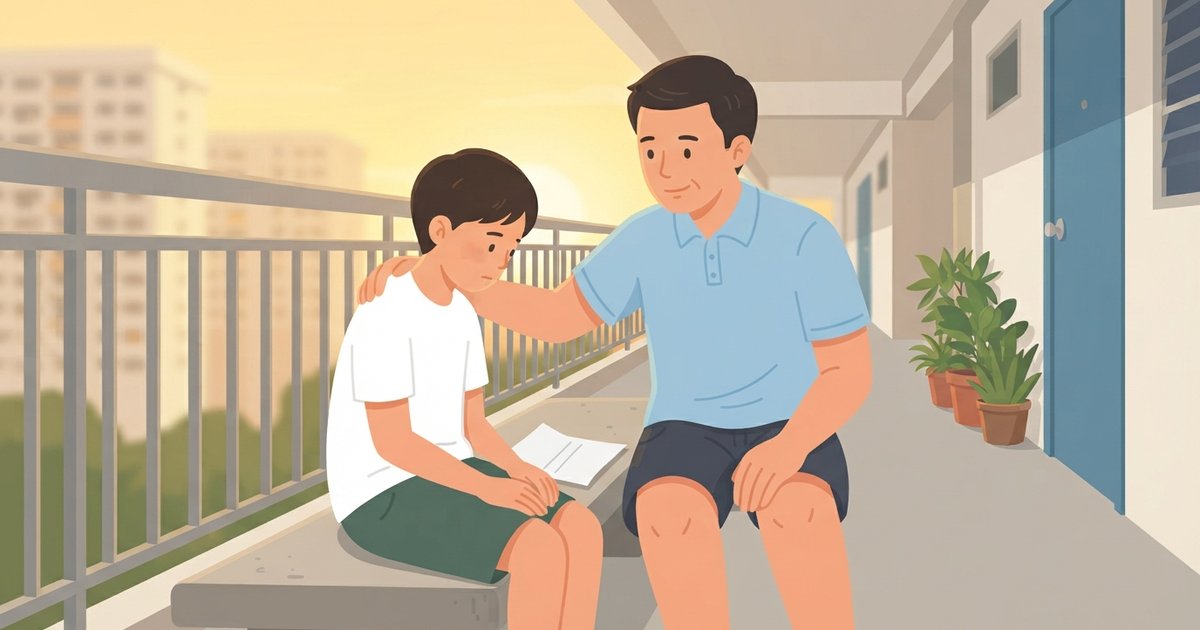
You’ve seen the number. Your child has seen your face when you saw it. What you say in the next 48 hours will stay with them far longer than the score.
This isn’t a guide to appeals, school rankings or finding a better tuition centre. It’s about the conversation, the one many Singapore parents end up having badly in the school car park.
What should I say in the first five minutes?
Less than you think. Your child already knows the result disappointed. They don’t need it confirmed, picked apart or compared with a cousin’s.
Try:
- “I’m proud of how hard you worked this year.”
- “It’s okay to feel upset. I’m here.”
- “We’ll figure out the next step together, but not tonight.”
Then stop talking. The silence feels awkward to you. To a 12-year-old, it feels safe. The school-choice spreadsheet can wait.
What should I avoid saying, even if I’m disappointed?
Some lines sound harmless but land hard:
- “After all that tuition…” turns money into guilt.
- “Your friend got…” Comparison is the fastest route to shame.
- “If only you had…” The exam is over. Regret can’t be studied away.
The money pressure is real. One Singapore father spends S$7,000 a month on tuition for his 12-year-old preparing for PSLE. When spending is that high, disappointment can come out sounding like a bill. Your child didn’t sign the contract, so don’t hand them the invoice.
How do I tell if my child is really okay?
Kids who sat through months of heavy tuition often carry more than they show. Children who attend many tuition classes commonly report chronic stress and lack of sleep. A disappointing score can be the last straw rather than the whole story.
Watch the next two weeks, not the next two hours:
- Sleeping much more, or much less
- Pulling away from friends or going quiet in the class group chat
- Saying “I’m stupid” or “I’m not good at anything”
- Losing interest in things they normally love
If any of these stick around, talk to the school counsellor or your family doctor. Asking for help early is not overreacting.
Was all that tuition wasted?
Not entirely. Still, it’s worth asking yourself quietly. One P5 family spent over S$5,000 in a year at a Tampines centre, and their daughter went from a C to a C+. More hours didn’t mean more understanding.
Many adults look back and say they didn’t need more tuition. They needed learning that was more structured and more enjoyable. Keep that in mind as your child heads into Secondary 1. The answer to a disappointing PSLE is rarely more of the same, only harder.
What should the holidays before Secondary 1 look like?
Rest first, and really rest. A few weeks without assessment books isn’t falling behind. It’s recovery.
When your child is ready, keep it light and curious:
- Close gaps without pressure. MOE’s free Singapore Student Learning Space has personalised learning paths for P5–S2 Math, so the bridging help is already part of the school system.
- Let them lead one subject. Ask what they actually want to get better at, not which subject scored lowest.
- Swap drilling for explaining. A child who can explain a fraction out loud understands it. A child who can only copy worked answers doesn’t.
If you want support at home, LearnBuddy’s tutor asks guiding questions instead of handing over answers, and parents can read every session transcript. It’s built to work alongside school, not to replace your judgement, and there’s no annual lock-in.
The Bottom Line
The PSLE score decides a Secondary 1 posting. It doesn’t decide who your child becomes. How you react this week does shape how they’ll face the next setback, and the one after that.
Lead with warmth. Hold off on strategy. Watch for signs that need help. Then, once everyone has rested, build a calmer way to learn.
Your child will remember what you said long after they’ve forgotten the number.