
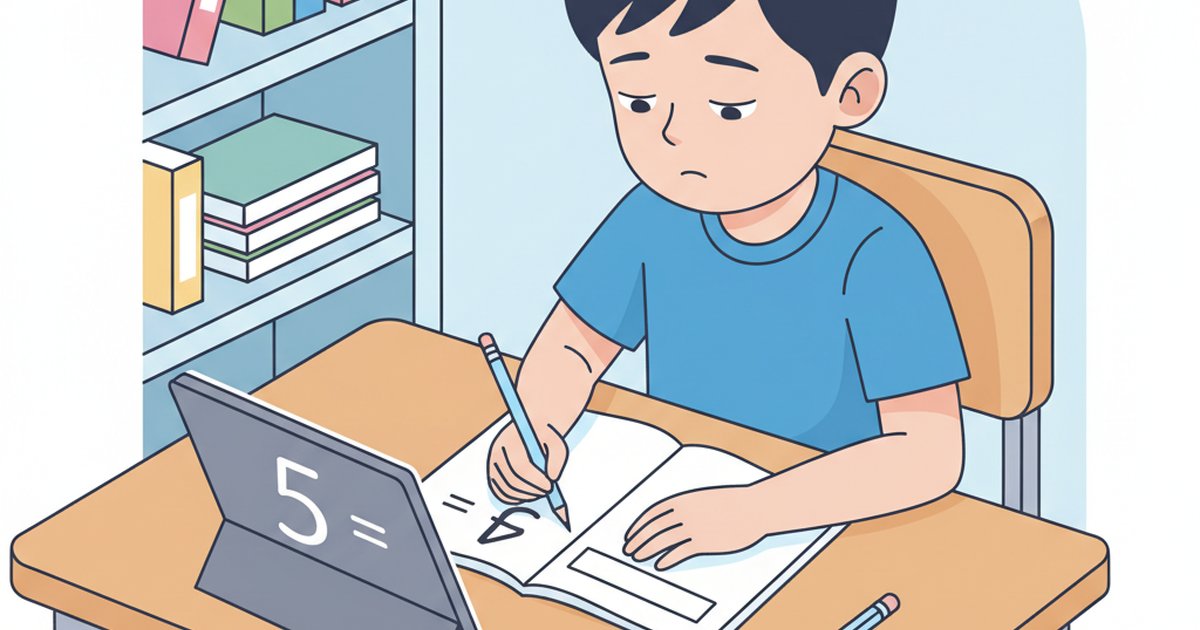
“My son finishes his Math worksheet in 15 minutes with the AI, but can’t do a single question in the exam hall.”
If you’ve heard a version of this from a parent on KiasuParents, or muttered it about your own kid — congratulations, you’ve spotted metacognitive laziness. It’s the academic term for the failure mode every Singapore parent secretly worries about, and a December 2024 study put a label on what teachers had been seeing for years.
Here’s what’s happening, how to spot it in your child, and what to do about it.
What the Research Actually Says
The December 2024 study found that kids who used answer-giving AI tutors retained less than kids who used either no AI at all or AI configured to ask guiding questions instead of giving solutions.
The mechanism is simple: when the AI does the thinking, the kid stops noticing when she doesn’t understand. The shortcut becomes the habit. The skill that doesn’t get practised — recognising her own confusion — atrophies.
It’s not that AI tutoring is bad. It’s that the wrong kind, used the wrong way, makes kids worse learners while looking like it’s making them better.
How to Spot It in Your Own Kid
Five warning signs:
- Homework finishes in half the usual time. Suspicious, not impressive.
- No working shown. A P5 Math problem solved in two lines, no bar model, no scratchpad.
- She struggles to explain what she did. Ask her to walk you through the working. If she can’t, she didn’t do it.
- Grades hold, then suddenly drop. Usually at a topic-test or mid-year exam when the AI isn’t there.
- Resistance to pen-and-paper practice. “Can I just use the AI?” — that’s the dependency talking.
One or two of these means watch closely. Three or more means intervene now.
The Four Fixes
1. Switch on Socratic mode (or switch tools)
If your AI tutor doesn’t have an explicit “don’t give answers” mode, the tool is half the problem. Real Socratic AI asks “what would you try first?” instead of solving — the kid has to think, every time.
2. Force paper-and-pencil for working
Set a household rule: AI for hints, paper for working. The kid types or speaks her question, the AI responds Socratically, and the actual solving happens with a pencil on paper she can show you afterwards. No typed working, no AI-completed scribbles.
3. Weekly “explain it back” check
Every Sunday, pick one question your kid did with AI help that week. Ask her to walk you through it — out loud, no notes, no peeking. If she can’t, the AI was the teacher and she was the audience. Redo the question Socratic-mode.
4. AI-free practice every Saturday
One day a week, no AI. Paper assessment book, pencil, no shortcut. This rebuilds the muscle the AI was atrophying. Twenty minutes is enough to keep the metacognitive skill alive.
When AI Is Actually Helping
The honest counterpoint: most Singapore kids using AI tutors properly are better learners than they were a year ago. The dependency failure is real but avoidable.
You’ll know AI is helping when:
- Your kid still struggles a little on questions and that’s fine
- She writes working on paper, then checks it with the AI
- She can explain what she did when you ask
- Her exam grades hold up without the AI in the room
That’s the destination. Metacognitive laziness is what happens when you skip the work to get there.
The Bottom Line
The AI tutor itself isn’t the problem. Wrong configuration + no parent oversight is the problem. Switch on Socratic mode, enforce paper working, do a weekly explain-back, leave one AI-free practice day.
Do those four things and the December 2024 study’s warning never applies to your child. Skip them and you’ll see the warning signs by August — right before the prelim that decides what secondary school she gets into.
Catch it early. It’s much harder to undo later.