
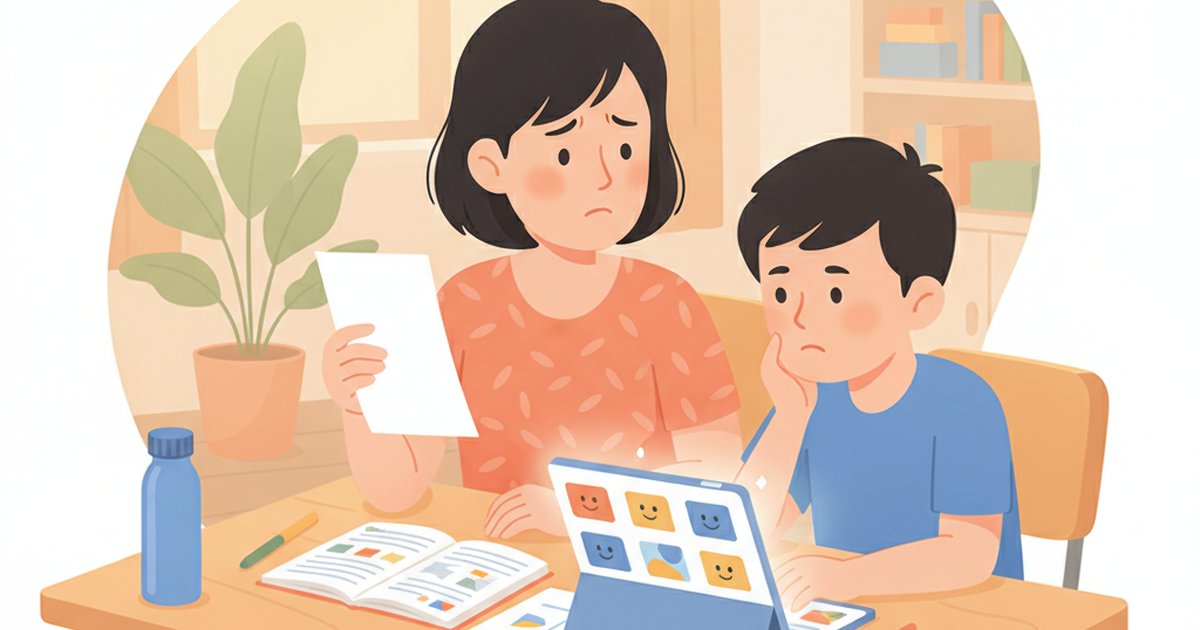
You’re staring at a tuition invoice. One Tampines centre cost a P5 family over S$5,000 in a year — and their daughter moved from a C to a C+. Another Singapore father spends S$7,000 a month prepping his 12-year-old for PSLE. So when an AI tutor advertises “all subjects, S$49/month,” it’s fair to ask: is this real help, or a cheaper way to disappoint yourself?
Here’s the honest answer.
Where AI Tutors Genuinely Win
The maths is hard to argue with. A tuition centre runs S$180–S$600/month per subject. Geniebook is around S$154/month for a single subject on an annual lock-in — roughly S$1,850 a year. AI-first tools like Tutorly and Klara sit at S$49/month with no contract.
But cost isn’t the real win. It’s the feedback loop. With centres, “you only find out if it’s working when exam results arrive months later.” You pay, you wait, you pray. A good AI tutor gives instant explanations, is available at 9pm when your child is actually stuck, and never wastes a slot because your kid was tired or had CCA. No travel, no flyers at the school gate, no marking pile landing back on you.
Where They Fall Short (Be Honest)
Most “AI tutors” are thin chat wrappers. One parent’s blunt verdict on a big incumbent: “the only noticeable AI element is the app repeats wrong questions.” Three real problems:
- They give answers instead of teaching. Academic research warns current AI tutors are reactive — handing over solutions without building understanding. A December 2024 study flagged “metacognitive laziness” from overreliance.
- They can hallucinate. One wrong PSLE-style answer erodes trust fast.
- Typing kills it for younger kids. A P3 parent held off subscribing to Science because her daughter couldn’t type long synthesis answers — and maths working can’t be typed at all.
For an unmotivated child who needs a push, many parents still recommend a human tutor. AI works best for kids willing to engage.
The PSLE-Specific Test
PSLE is where every product over-indexes, so scrutinise harder. Repetitive drill questions won’t cut it — “as students gear up to exam-oriented settings, it would not work.” Check whether content matches the actual exam format, not just topic coverage. For Mother Tongue, verify the syllabus: one major platform ran Chinese on the old syllabus, not 欢乐伙伴, so it didn’t match what schools teach.
Don’t overlook the free option either. MOE’s Student Learning Space includes LEA, which asks guiding questions, and ALS, which builds personalised paths for P5–S2 Maths. It’s limited in subject coverage, but it’s a genuine, safety-reviewed starting point at zero cost.
How to Decide Without Regret
Run any candidate through five checks before you pay:
- Socratic, not solutionic — does it guide, or just spit answers?
- Multimodal — voice and drawing matter if your child is P1–P6 and can’t type fast.
- A parent dashboard that shows real learning — which concepts your child is stuck on, not just “5 worksheets done.”
- No annual lock-in — monthly billing, pause anytime, transparent refund. The horror stories about 60-day suspension caps and aggressive auto-renewal are all over KiasuParents.
- A free trial — test it on your child’s actual weak topic before committing.
Something free like SLS plus one well-chosen paid tool often beats a S$400/month centre subscription you never fully use.
The Bottom Line
An AI tutor is worth it for PSLE if — and only if — it teaches instead of answering, works for how your child actually studies, and lets you see progress before results day. At a fraction of centre fees, the downside risk is small when there’s no lock-in. Try before you commit, watch the first month closely, and judge it on whether your child is thinking harder — not just finishing faster.