
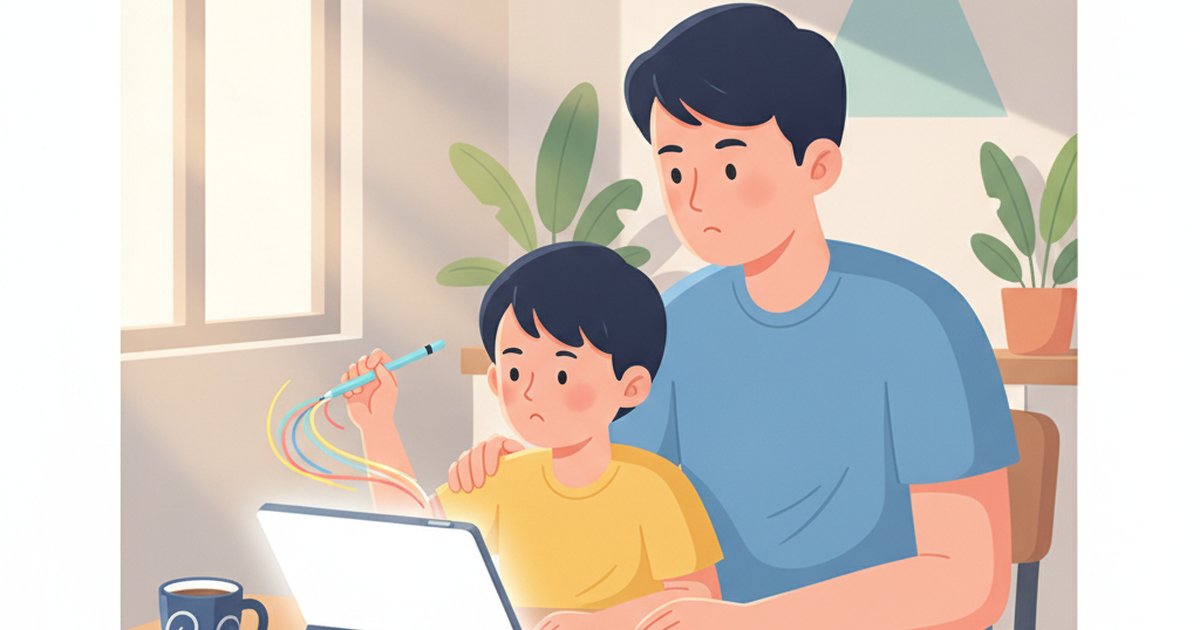
The phrase “AI tutor” is doing a lot of heavy lifting in Singapore right now. Tutorly runs at S$49/month, Klara at S$49, Geniebook around S$154/month per subject. Most of them show you a chat box, take a screenshot or typed question, and reply. That’s not a tutor. That’s a ChatGPT wrapper with a Singapore skin.
The good news: you can tell them apart in about six minutes, before you enter a card number. Here’s the test-drive.
Test 1: Ask it to teach, not to answer
Type a P5 Math problem sum and add: “Don’t give me the answer — guide my child to work it out.”
A wrapper caves and dumps the full solution anyway. A real tutor holds back and asks a guiding question first. This matters more than it sounds. Academic research is clear that answer-first AI breeds “metacognitive laziness” — kids stop thinking. A December 2024 study warned overreliance on standard ChatGPT-style tutoring hurt retention. You want the tool that makes your child work, the way MOE’s own SLS LEA feature asks guiding questions instead of handing over answers.
Test 2: Can your child use it without typing?
Sit your P3 down and watch. If the only input is a keyboard, a lower-primary kid is finished before they start. One Singapore mum held off subscribing to Science entirely because her P3 daughter struggled to type long synthesis answers — the typing distracted from the learning.
Math working can’t be typed at all. A genuine multimodal tutor takes voice input and a drawing canvas so your child can talk through a problem or write out their steps. Most incumbents are text-typing-dominant. That single gap tells you whether the product was built for kids or for adults.
Test 3: Push it on a fact and a syllabus
Ask a Chinese question and check the syllabus. Geniebook’s Chinese was built on the old syllabus, not 欢乐伙伴 — so it didn’t match what schools actually teach. Then ask a tricky PSLE-style Science question and see if it hallucinates. AI that makes things up is a real risk when your child is still building foundations. One wrong answer at the wrong moment and trust is gone.
Poke it twice. If the “AI” is just repeating questions your child got wrong — a documented complaint about Geniebook, where a parent said the only visible AI was that it “repeats wrong questions” — you’re paying premium money for a flashcard app.
Test 4: Can you see what’s actually happening?
Open the parent view. A wrapper shows you “5 worksheets completed.” A real tutor shows you which concepts your child is stuck on, what they retried, and a weekly trend line. Geniebook’s own marketing admits the flaw honestly: “you only find out if it’s working when exam results arrive months later.” You shouldn’t have to pray until PSLE to know your S$1,850 a year did something.
Test 5: Read the exit door before you enter
Before subscribing, find the cancellation terms. Geniebook locks you into a one-year plan with a 30-day refund window and auto-renewal; one parent was told suspension was flexible, then discovered the cap was 60 days — “not in contract.” Forums like KiasuParents are full of these stories.
A tool confident in its product offers monthly billing and cancel-anytime. Lock-in dressed as a “discount” is a tell that the retention is contractual, not earned.
Scoring your test-drive
Run all five. A real AI tutor should:
- Guide, not solve when you ask it to
- Take voice and drawing, not just typing
- Stay accurate and on the current syllabus (欢乐伙伴 for Chinese)
- Show concept-level progress to you, the parent
- Let you cancel monthly, no lock-in
Five out of five — start the free trial and give it four weeks of real routine. Three or fewer — keep looking. There are enough options now that you don’t have to settle for a chat box with a Singapore accent. The test costs you six minutes. Picking wrong costs a year and a few thousand dollars.