
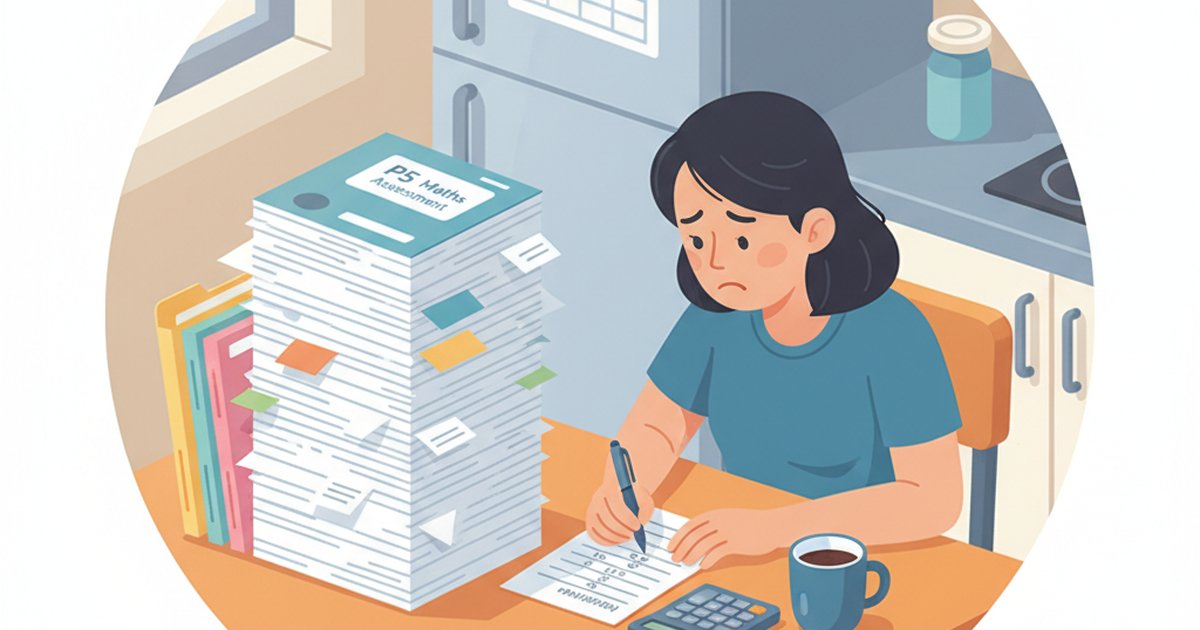
You pay the monthly invoice. The kid goes. The grades wobble. You pay again. Singapore parents spent S$1.8 billion on private tutoring in 2023 — most of it on faith.
Here are seven things the brochure quietly leaves out.
1. The Sticker Price Isn’t the Real Price
S$180–S$600 a month per subject is the headline. Then come the workbooks pushed at the counter, the transport, the holiday “intensive” weeks. One P5 family in Tampines totalled it: over S$5,000 in a single year — and the daughter went from a C to a C+. A Singapore father preparing his 12-year-old for PSLE admitted he spends S$7,000 a month on tuition.
Add it up before the next term deduction. The receipt at the front desk is not your bill.
2. You Won’t Know If It’s Working Until Results Day
Even Geniebook’s own marketing admits it: “Parents pay monthly and hope for the best… you only find out if it’s working when exam results arrive months later.”
That’s the whole industry, not one brand. Most centres send a curt termly comment — sometimes nothing at all. By the time the SA2 paper comes back, you’ve already paid four more months of fees on a method that wasn’t working.
3. Anyone Can Open a Tuition Centre
One private tutor pushing for accreditation put it plainly: “the barrier to entry is almost non-existent.” The industry, he said, is “a free-for-all.”
There’s no minimum teaching qualification for most centres. No mandatory CPD. No public list of which tutors are MOE-trained versus university students moonlighting. You are paying premium prices on trust, with no way to verify what you’re trusting. Cross-check anyone you hire against parent reviews on KiasuParents before signing the form.
4. The Marking Still Lands on You
The centre runs the lesson. The assessment books go home. Math problem sums and Science open-ended questions can’t be auto-marked — every working line needs an adult to read it. Parents end up marking after dinner anyway, then re-explaining the mistakes the centre didn’t catch.
You’re paying S$400 a month and still doing the homework loop yourself.
5. Those Flyers at the School Gate Are Designed to Scare
The people handing out flyers outside primary schools at 1:30pm aren’t there to help. They’re there to tell your child — directly — that she’s “falling behind” and “needs help before PSLE.” The MOE is studying options to discourage these practices precisely because they target kids, not parents.
If your child comes home anxious after a flyer week, that isn’t a coincidence. That is the marketing budget working.
6. A Bad Day Wastes a Whole Slot
Tuesday 5pm. Fever, or a hard day at school, or just not in the mood. The slot costs the same. Group classes don’t reschedule. Twice-a-week centres plus travel and waiting eat 6–8 hours of family time before a single concept is taught.
Parents describe their kids’ tuition timetables as more rigid than school’s. Chronic stress and lack of sleep are now common complaints among kids carrying three or more sessions a week.
7. The Spend Gap Is Quietly Punishing You
MPs in Parliament have raised concerns about the widening tuition spend gap between income brackets. Wealthier families sign children up for more programmes, or more expensive ones, and the average HDB household feels squeezed into matching what they can’t actually afford.
The S$1.8B market grew nearly 30% from 2018 to 2023. Not because tuition got better. Because the arms race got louder.
So What Do You Actually Do?
Three small moves before the next invoice cycle:
- Add up the real annual cost — fees, books, transport, holiday camps — and divide by the grade change you actually saw last year.
- Ask for proof of learning, not attendance. A real progress view at the concept level, not a one-line termly remark.
- Try the free option first. MOE’s SLS platform has guided learning paths for P5–S2 Math built by actual MOE pedagogues. Limited in scope, but free and aligned to what your child is taught in school.
Tuition can work. It just shouldn’t work on blind trust. Make the centre prove it — or stop paying for hope.